
Snaking vs. Hydro Jetting for Commercial Sewer Lines
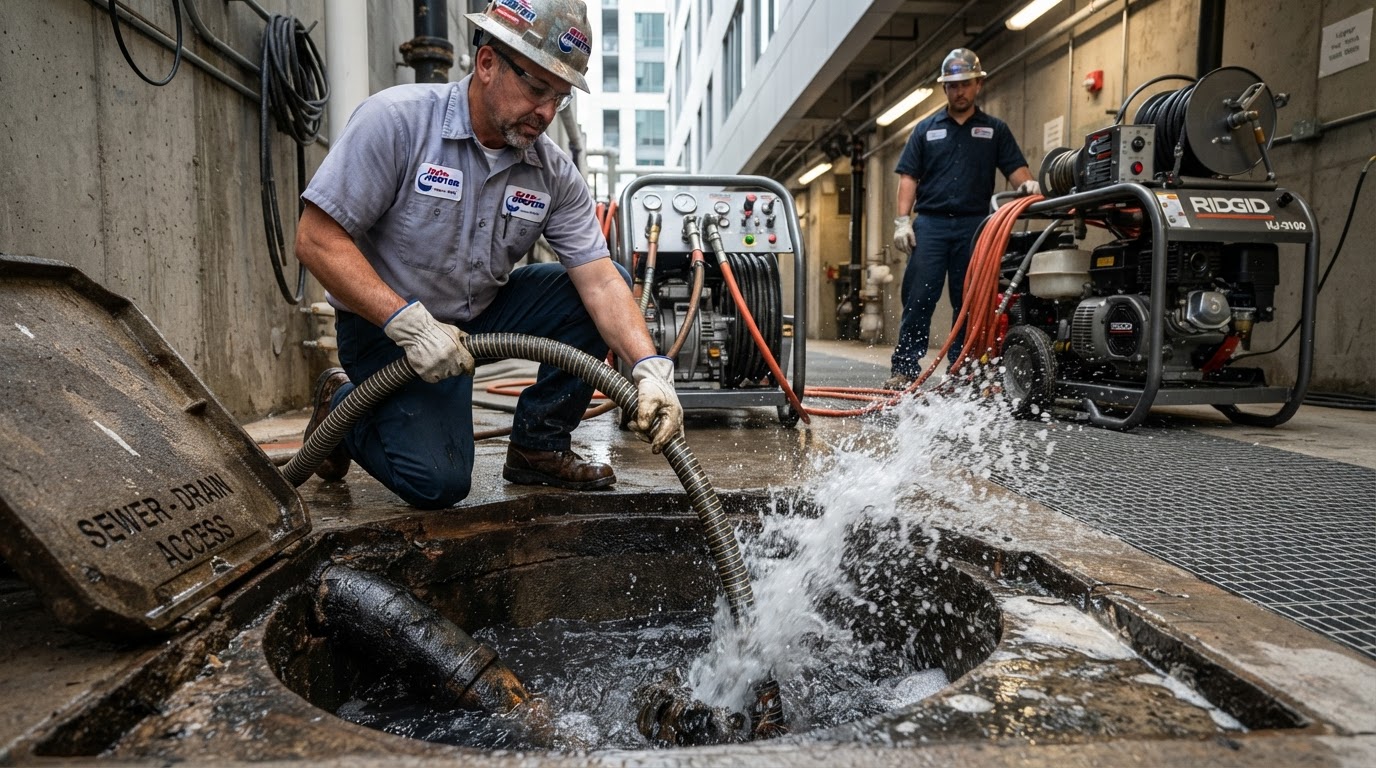
When your building's main sewer line backs up, you need the right tool for the job. Understand the difference between traditional snaking and commercial hydro jetting.
Not All Drain Cleaning Methods Are Created Equal
When a commercial building experiences a main sewer line backup, the immediate goal is to restore flow. However, the method used to clear the line determines how long it will stay clear. The two primary methods are snaking (cabling) and hydro jetting. Understanding the difference is critical for property managers and building owners.
Traditional Snaking: The Band-Aid Solution
A drain snake uses a metal cable with a cutting head to punch through a blockage. It's highly effective for retrieving soft blockages (like paper products or wipes) and clearing minor roots. However, for commercial lines suffering from heavy scale, grease, or sludge buildup, snaking only clears a small path through the center of the pipe. The walls remain coated, and the pipe will inevitably clog again.
Hydro Jetting: The Permanent Fix
Commercial sewer line jetting (hydro jetting) uses highly pressurized water (up to 4,000 PSI) to scour the entire interior circumference of the pipe. It doesn't just punch a hole; it completely removes scale, grease, sludge, and debris, flushing it all down into the city main. Jetting restores the pipe to its original flow capacity.
When Should You Choose Jetting?
- Heavy Grease Buildup: Essential for restaurants and mixed-use buildings.
- Pipe Scale: Older cast iron pipes develop scale that catches debris. Jetting removes this scale.
- Recurring Backups: If you are snaking the same line multiple times a year, it's time to hydro jet.
- Preventive Maintenance: The best way to keep lines clear long-term.
Ready to Clear the Way?
Clog Drain NYC provides commercial water jetting and drain cleaning across Brooklyn, Manhattan, Queens, the Bronx, and Staten Island.